Staying on Top of Regulatory Changes: What's New in Early Childhood Education for 2025/2026?
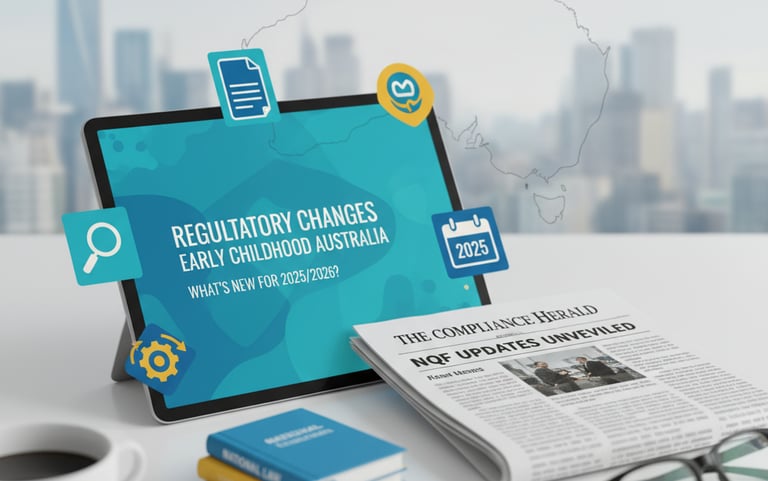
The early childhood education and care (ECEC) sector in Australia is dynamic, constantly evolving to meet the needs of children and families while upholding the highest standards of quality and safety. For approved providers, nominated supervisors, and educators, staying abreast of regulatory changes in early childhood Australia is not just good practice—it's a legal obligation.
Navigating new NQS updates and understanding how they impact your service can be challenging. As we look towards 2025/2026, it's crucial to be proactive. Here's a look at key areas of focus and what you should be mindful of to ensure your service remains compliant and continues to provide exceptional care.
1. Enhanced Focus on Child Safe Standards and Digital Safety
Following recent national discussions and reviews, expect a continued strengthening of Child Safe Standards within the National Quality Framework (NQF). This includes a particular emphasis on digital environments.
What to Watch For: Greater detail in regulations concerning the safe use of digital technology, online safety, and preventing cyberbullying. This may involve updated requirements for service policies, staff training, and how services manage children's access to digital devices and online content.
Why It Matters: The safety of children in all environments, including online, is paramount. Proactive measures in this area will protect children and ensure your service meets its duty of care in an increasingly digital world.
2. Evolution of the Early Years Learning Framework (EYLF) V2.0 Implementation
The Early Years Learning Framework (EYLF) V2.0 brought significant shifts, and 2025/2026 will see a deeper embedding of these changes across the sector, with regulatory bodies closely monitoring implementation.
What to Watch For: Assessment and Rating visits will likely place a stronger focus on how services are translating the renewed EYLF V2.0 principles into daily practice. Expect scrutiny on how the five learning outcomes are being observed, documented, and reflected in educational programs, particularly concerning sustainability, Aboriginal and Torres Strait Islander perspectives, and critical reflection.
Why It Matters: A robust implementation of EYLF V2.0 ensures that children's learning experiences are current, culturally responsive, and aligned with national best practices. This directly impacts Quality Area 1 (Educational Program and Practice).
3. Staffing and Qualification Requirements: Ongoing Review
The sector continually grapples with workforce challenges. While major overhauls may not be imminent, expect ongoing discussions and potential minor adjustments to staffing and qualification requirements.
What to Watch For: Keep an eye on announcements from ACECQA and state/territory regulatory authorities regarding updates to approved qualifications or specific ratio requirements, particularly in light of evolving workforce data and regional needs. This might also include clarifications around casual staff qualifications and relief educator requirements.
Why It Matters: Maintaining compliant staffing ratios and ensuring all educators hold current, approved qualifications is non-negotiable for service operation and crucial for providing quality education and care.
4. Stronger Emphasis on Governance, Leadership, and Continuous Improvement
The role of leadership and effective governance in driving quality is under continuous review. Expect a heightened focus on how services implement their Quality Improvement Plan (QIP) as a living, breathing document.
What to Watch For: Regulatory authorities will be looking for evidence that your QIP is genuinely driving improvement, not just a document for compliance. This includes active reflection, clear goals, assigned responsibilities, and documented progress. Robust governance structures, including effective policies and procedures, will also be scrutinised.
Why It Matters: Strong governance and leadership underpin every aspect of your service's quality. A well-executed QIP demonstrates a commitment to continuous improvement, often distinguishing services that achieve "Exceeding" ratings.
5. Updates to the National Law and Regulations
While less frequent, amendments to the Education and Care Services National Law and National Regulations can have significant impacts.
What to Watch For: Stay subscribed to official government and regulatory body newsletters (e.g., ACECQA, your state/territory regulatory authority) for any legislative changes. These can encompass a broad range of areas, from administrative processes to specific operational requirements.
Why It Matters: Direct changes to the law and regulations require immediate action to ensure your service remains compliant. Ignoring these updates can lead to breaches, penalties, and impact your service's approval.
Staying Ahead of the Curve
Proactively understanding and adapting to Australian childcare law updates is vital for the success and sustainability of your early childhood service. Don't wait for your next Assessment and Rating visit to discover you're behind.
As Early Care Policy, Training, and Compliance Consultants, we specialise in keeping services like yours informed and compliant. We can assist with:
Regulatory Update Briefings: Clear explanations of upcoming or recent changes and their implications.
Policy and Procedure Reviews: Ensuring your documentation reflects the latest requirements.
Targeted Training: Professional development for your team on new standards and best practices.
Mock Assessments: Preparing your service to confidently meet regulatory expectations.
Contact us today to ensure your service is perfectly positioned for success in 2025/2026 and beyond.
Simplifying compliance so educators can focus on children’s learning and wellbeing.
© 2026. All rights reserved.