Decoding the National Law and Regulations: 5 Key Policy Areas You Can't Afford to Overlook
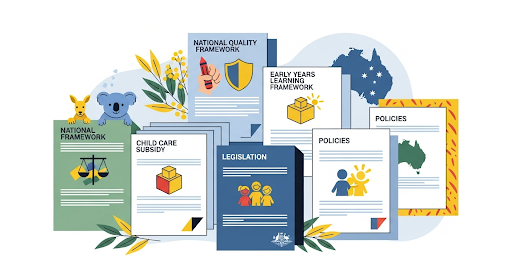
The Australian early childhood education and care (ECEC) sector is governed by the National Quality Framework (NQF), a comprehensive system designed to ensure high standards of care and education for children. At the heart of the NQF are the Education and Care Services National Law and National Regulations, which provide the legal foundation for all approved services.
While these documents are essential, they can also be dense and challenging to navigate. For busy service providers, understanding the nuances of the law is crucial not only for compliance but for building a safe, quality service.
Here, we break down five of the most critical and often misunderstood policy areas within the National Law and Regulations. Overlooking these can lead to compliance issues, poor ratings, or worse—a risk to a child's health and safety.
1. Child Safe Standards and Digital Technology Use
With recent amendments to the National Regulations, the focus on child safety has been significantly strengthened. This goes beyond simple child protection policies.
What the Law Says: New regulations require services to have specific policies and procedures for the safe use of digital technology and online environments. This includes rules around the use of personal devices by staff, a greater focus on digital security, and mandatory reporting timeframes for allegations of physical or sexual abuse.
Why It Matters: The digital landscape is a new frontier for child safety. Services must not only have a strong child protection policy but also a clear framework for how digital technologies are used to protect children from harm. This includes the use of CCTV and the handling of images and videos.
Actionable Step: Your service's policy manual should be updated to reflect these new requirements. Consider providing dedicated training to staff on the safe use of digital devices and the new, faster reporting timeframes for serious incidents.
2. Physical Environment and Space Requirements
While it might seem straightforward, compliance with physical environment regulations is a common area for non-compliance.
What the Law Says: The National Regulations specify minimum indoor and outdoor space requirements per child. For example, a centre-based service must have at least 3.25 square metres of unencumbered indoor space and 7 square metres of unencumbered outdoor space per child.
Why It Matters: Regulatory authorities conduct physical inspections during Assessment and Rating visits. They measure spaces and check that they are safe, well-maintained, and support children's learning. Non-compliance in this area can lead to a "Significant Improvement Required" rating or even penalties.
Actionable Step: Conduct a thorough audit of your service's physical environment. Ensure all indoor and outdoor spaces are measured accurately and that the number of children enrolled never exceeds your approved capacity. Check that all furniture and equipment are in good repair and do not pose a hazard.
3. Staffing Arrangements and Educator Qualifications
Staffing is often one of the most complex and scrutinised areas of compliance. Getting this wrong can have severe consequences.
What the Law Says: The National Regulations set strict educator-to-child ratios and qualification requirements. This includes the presence of an Early Childhood Teacher (ECT) for a specific number of hours depending on the service and the number of children. The regulations also specify the qualifications for other educators and the requirements for volunteers and students.
Why It Matters: Ratios and qualifications are paramount for ensuring children's safety and the quality of their education. During an unannounced visit, a regulatory authority will verify that you have the correct number of qualified staff on duty at all times.
Actionable Step: Maintain a meticulous record of all staff qualifications, including first aid, anaphylaxis, and asthma management training currency. Use a roster or staff management system to ensure that you always meet or exceed the required ratios, especially during busy periods or when staff are on leave.
4. Governance and Leadership
This area, Quality Area 7 of the NQS, is often viewed as "behind the scenes," but it underpins all other aspects of service quality.
What the Law Says: Approved providers and nominated supervisors have a legal obligation to ensure the service is well-managed and provides high-quality education and care. This includes having clear policies and procedures, a commitment to continuous improvement (via the Quality Improvement Plan or QIP), and effective communication with staff, families, and the regulatory authority.
Why It Matters: Strong governance and leadership are the difference between a compliant service and a truly "Exceeding" one. It demonstrates a culture of professionalism, continuous learning, and accountability. A poorly managed service is more likely to have issues across all other Quality Areas.
Actionable Step: Regularly review your QIP to ensure it is a living document that guides your improvement efforts. Foster an open and ethical culture where staff feel empowered to raise concerns and contribute to policy development.
5. Policies, Procedures, and Documentation
The National Regulations require services to have a comprehensive set of written policies and procedures. This isn't just about having them on a shelf—it's about them being up-to-date and understood by all.
What the Law Says: From medication administration and excursions to enrolment and incident management, the National Regulations list a wide range of policy areas that services must have. These policies must be easily accessible to staff and families.
Why It Matters: These documents are your service's operational rulebook. If an incident occurs, the regulatory authority will review your policies and procedures to ensure you had the right framework in place to manage the situation. Outdated or non-compliant policies are a major red flag.
Actionable Step: Schedule a regular review of your entire policy manual (at least annually). Ensure every team member knows where the policies are located and has received training on them. When you make a change, document it and communicate it clearly to your staff.
Need a Partner in Compliance?
Understanding the National Law and Regulations is the first step, but staying on top of it all can be a full-time job. Our team of expert consultants specialises in helping Australian childcare centres and Family Day Care services navigate these complexities.
Whether you need a full policy and procedure review, bespoke staff training on new regulations, or a mock assessment to prepare for your next A&R visit, we are here to simplify compliance and empower your service to thrive.
Contact us today for a free consultation to discuss your service's specific needs.
Simplifying compliance so educators can focus on children’s learning and wellbeing.
© 2026. All rights reserved.