Maximising Your Quality Improvement Plan (QIP): A Strategic Approach
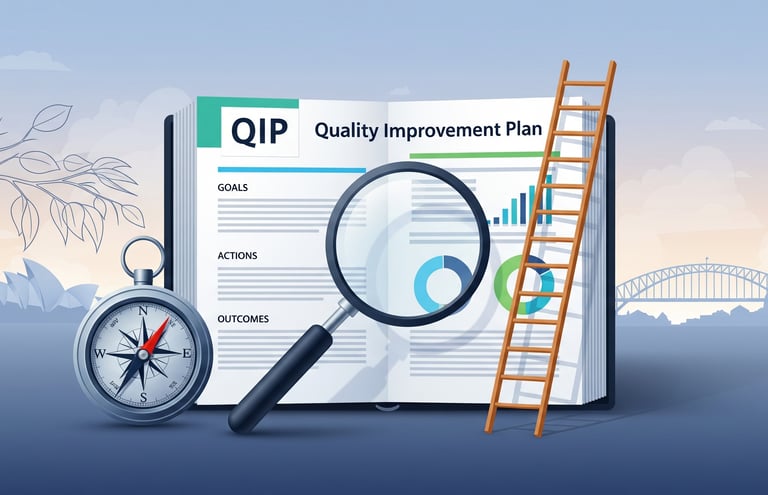
The Quality Improvement Plan (QIP) is more than just a document—it's your roadmap to excellence. For many early childhood education and care (ECEC) services in Australia, the QIP can feel like a daunting compliance task, a mere checklist to complete for the Assessment and Rating visit. However, a strategically developed QIP is the key to elevating your service from simply meeting standards to truly exceeding them.
Moving beyond a "check-box" approach requires a different mindset. It means viewing the QIP as a living document that drives genuine, continuous improvement. Here’s a strategic approach to maximising your QIP.
1. Start with a Deep, Honest Reflection
Before you write a single goal, you need to understand where your service truly stands. The best QIPs begin with a comprehensive and honest self-assessment.
Go Beyond the Surface: Instead of just noting "we need to improve our parent communication," dig deeper. How do you know this? Has a parent survey revealed this? Have you received specific feedback? Use data from staff and family surveys, observations of practice, and a thorough review of your current policies and procedures.
Engage Your Team: The QIP is not a solo mission. Involve your educators, managers, and even children and families in the reflection process. A brainstorming session where everyone identifies strengths and challenges will create a shared sense of ownership and lead to more insightful improvement goals.
2. Set SMART Goals that are Meaningful
Once you’ve identified your areas for improvement, you need to translate them into specific, achievable goals. A strategic QIP uses SMART goals.
Specific: Instead of "improve Quality Area 1," a better goal is "develop and implement a new process for documenting children's learning to better reflect the Early Years Learning Framework (EYLF) V2.0 planning cycle."
Measurable: How will you know if you've succeeded? Your goal should include measurable outcomes, such as "a 20% increase in documented observations using the new process by the end of the quarter."
Achievable: Set goals that are challenging but realistic for your service.
Relevant: Ensure your goals align with the National Quality Standard (NQS) and your service’s philosophy.
Time-bound: Give each goal a clear deadline to create accountability.
3. Focus on Process, Not Just Outcomes
A common mistake is focusing only on the outcome (e.g., "Achieve Exceeding in Quality Area 3"). A strategic QIP is all about the process.
Identify the "How": For each goal, list the specific actions you will take. These actions should be practical and detailed. For example, if your goal is to improve parent communication, your actions might include: "Create a new 'Parent Portal' on our website," "Train all educators on how to use the new communication platform," and "Run a trial period with 10 families and gather feedback."
Assign Responsibilities: Clearly assign who is responsible for each action. This ensures that tasks don't get overlooked and empowers your team members to lead.
4. Review and Celebrate Progress Regularly
Your QIP should not be a document that sits in a binder for a year. A strategic approach involves ongoing monitoring and celebration.
Schedule Regular Reviews: Set aside time at staff meetings (e.g., monthly or quarterly) to review your QIP. Discuss progress, identify any barriers, and adjust your plan as needed. This shows you're committed to continuous improvement.
Celebrate Small Wins: Acknowledge and celebrate progress, no matter how small. Did a new initiative lead to positive feedback from a family? Did an educator implement a new practice that improved an outcome for a child? Recognizing these successes keeps the team motivated and reinforces the value of their hard work.
5. Use Your QIP to Tell Your Story
When it comes to your Assessment and Rating visit, your QIP is your narrative. It's the document that demonstrates your commitment to quality.
Highlight Your Journey: Use your QIP to showcase not just what you're doing, but why you're doing it. Explain the data you used to inform your goals and the impact your actions have had.
Demonstrate a Culture of Improvement: A well-documented QIP proves that you are a service that is reflective, proactive, and committed to providing the highest quality of education and care for children and families. This is a core element of achieving an "Exceeding" rating.
By adopting a strategic approach, your QIP transforms from a mere compliance document into a powerful tool for driving genuine, lasting change within your service.
Need help turning your QIP from a burden into a benefit?
Our expert consultants can work with your team to review your current plan, facilitate strategic planning sessions, and provide training to empower your service to achieve its quality goals.
Contact us today for a free consultation to discuss your service's specific needs.
Simplifying compliance so educators can focus on children’s learning and wellbeing.
© 2026. All rights reserved.